10 CHAPTER 9: REVIEW & FINAL EXAM
This chapter includes:
10.0.1 A Review of Key Points from the Course
- A Final Exam
10.1 COURSE REVIEW
Below are the key points of the course. If you do not remember a particular point, refer back to that specific chapter.
10.1.1 CHAPTER 1: DISASTER PREPAREDNESS
Home and workplace preparedness:
- Assembling a disaster supply kit
- Developing a disaster plan
- Developing a safe room
- Evacuation versus sheltering-in-place
10.1.2 CHAPTER 2: FIRE SAFETY AND UTILITY CONTROLS
Hazardous materials:
- Identification
- Defensive strategies
Utility control:
- Gas
- Electric
- Water
Size up: The importance of NERT size up and the steps in the size up process
Firefighting resources:
- General resources available
- Interior wet standpipes, including operation and limitations (if applicable)
- Portable fire extinguishers, their capabilities and limitations
Safety considerations:
- Safety equipment must be used at all times.
- NERT members must always use the buddy system.
- Fire suppression group leaders should always have a backup team available.
COURSE REVIEW
10.1.3 CHAPTER 3 & 4: DISASTER MEDICAL OPERATIONS
The “three killers”
Head-Tilt/Chin-Lift method of opening an airway
Methods for controlling bleeding:
- Direct pressure
- Elevation
- Pressure points
Treatment for shock:
- Patient position
- Maintenance of body temperature
Conducting triage
- Head-to-toe assessments
- Wound care, splinting and bandaging
- Treatment area considerations
10.1.4 CHAPTER 5: LIGHT SEARCH AND RESCUE
Goals of search and rescue:
- Rescuing the greatest number of people in the shortest amount of time
- Rescuing the lightly trapped survivors first
Size up:
- Construction types
Structural damage:
- Light damage
- Moderate damage
- Heavy damage
Search techniques:
- Be systematic and thorough
- Mark areas searched
- Document search results
Rescue techniques:
- Leverage and cribbing
- Survivor carries lifts and drags
COURSE REVIEW
10.1.5 CHAPTER 6: NERT ORGANIZATION
Organizational structure:
- Well-defined management structure
- Effective communications among agency personnel
- Accountability
Command objectives:
- Identify the scope of the incident through damage assessment
- Determine an overall strategy and logistical requirements
- Deploy resources efficiently but safely
10.1.6 CHAPTER 7: DISASTER PSYCHOLOGY
- In the aftermath of disasters, survivors and disaster workers can experience psychological and physiological symptoms of stress.
- The steps NERT leaders should take to reduce stress on team members
- The steps NERT responders can take to reduce their own stress levels
- Strategies for helping survivors work through their trauma
10.1.7 CHAPTER 8: TERRORISM
- CBRNE indicators
- NERT protocols for terrorist incidents
- Protective actions following a terrorist incident
10.2 Course Summary
Don’t forget the importance of continuing education and training to maintain and improve your skills and knowledge. You can attend:
- Ongoing training that is offered every 3rd Saturday of the month, with April and October being Citywide drills
- Neighborhood meetings and activities
- Standard and advanced first aid courses
- Cardiopulmonary resuscitation (CPR) classes
- Independent Study (IS) courses available online from FEMA at
FINAL EXAM
This take-home examination consists of 31 multiple choice and short answer questions. Answer each question using the information presented in class or in the manual. Correct answers will be discussed during the review session at the start of the sixth class.
- A part of our self-preparedness goal is to develop a capacity for self-sufficiency. List six preparation steps you can take to improve your chances for surviving an earthquake.
- During an earthquake, many people are injured entering or exiting a building. Where is a safe place to take shelter?
| Indoors: | |
|---|---|
| Outdoors: | |
| In a car: |
- Water is probably the most important item to store in preparation for an earthquake. What is the recommended minimum you should have on hand?
per person, per , for days.
- Any event that has a profound emotional impact can evoke strong reactions. List some common responses to stress.
- There are four classes or types of fire. What types of fuels are represented by the following classes?
- What is the primary hazard associated with a fire involving energized electrical equipment?
Explosion b. Toxic gas
Electrical shock d. Heat
- We use the acronym P.A.S.S. to remind us of the steps required to properly operate a fire extinguisher. What does each letter stand for?
P: ____________________
A: ____________________
S: ____________________
S: ____________________
- As rescuers, we should be concerned about our safety, as well as the safety of the victim. List three pieces of personal protective equipment (PPE) that should be used during light search and rescue operations.
- When moving heavy objects, it is good practice to stabilize them during the lifting operation using blocks, books, or other available materials. What is this procedure called?
- Brick buildings constructed prior to 1933 are particularly prone to damage or collapse from earthquakes. List three ways to recognize these buildings.
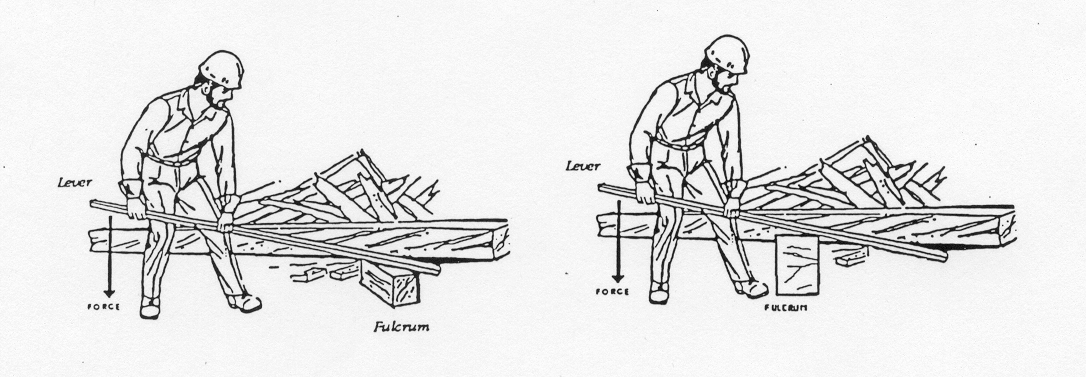
- Mechanical advantage is often needed to remove heavy objects from trapped victims. Which of the following diagrams is the most effective use of mechanical advantage?
** A B**
- It is important that there be a marking on the outside of a building telling that a search is in progress.
What marking would you put on the outside of a building before entering?
What marking would you use when exiting the building?
What information goes in the four quadrants?
(Top)__________________
(Left)___________(Right) ____________
(Bottom) _____________
- The most common airway obstruction is _______?
Dentures
Food
Tongue
Body fluids
- Our first attempt at controlling bleeding should be to apply______.
Pressure bandage next to wound
Direct pressure to wound
Pressure point above wound
Elevation
- Shock is defined as widespread inadequate tissue perfusion. It is a life-threatening condition that can be recognized by changes in mental status. In a disaster, as emergency responders, how can we treat a patient for shock?
- We can effectively save the lives of many injured victims by checking for life-threatening problems immediately and systematically. What are the four steps in assessing a patient?
- If during our initial triage, we encounter a victim who is not breathing, we should:
Start CPR immediately
Open the airway, repeat a 2nd time if necessary
Tag the patient “Dead”
Tag the patient “I” for Immediate
- When performing the blanch test, we can assume that the circulation system is functioning properly if the color return within ________ seconds of releasing the pressure on the nail bed.
| a. | 2 |
|---|---|
| b. | 5 |
| c. | 10 |
| d. | 15 |
- To check a patient’s mental status during triage, we ask _______________.
Their name
The day of the week
To follow a simple command
If they remember what happened
- What are the three classifications of building damage?
- What are some of the questions that you must answer before entering a building to do a search?
- How can you tell if your gas shutoff valve is working properly?
- When do you shut off the gas?
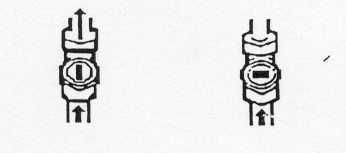
- After an earthquake, you smell gas! You look at your gas meter and see the dials spinning. You must shut off your gas! Circle the diagram that shows the gas valve in the off position.
- What type of extinguisher is recommended for your home?
- What are some of the signs of structural damage to a building that can be seen from the street?
- What are some signs of a Hazardous Materials spill?
- What are the four categories we use to sort people out during triage?
- During a disaster, what is the goal of the NERT team operations?
- If we take immediate action on victims showing signs of three life threatening conditions, we may save many lives. What are these conditions?
- What is the first thing we check for in all injured victims?
Mental status
Airway
Bleeding
Shock
- After tagging a victim RED (Immediate) during triage, that was sitting up in a chair, your next action should be:
quickly move to the next victim to triage.
treat them for shock by laying them down and keeping warm.
walk them to the treatment area.
do a head-to-toe exam on them.
- Fill in the CBRNE acronym below with the correct word as it refers to terrorism weapons.
C
B
R
N
E
- What are the body’s three routes of exposure?
- List four possible CBRNE indicators.
- What are the first steps of the decontamination process?
- What is in your disaster supply kit that will allow you to receive information and instructions from when a terrorist incident has occurred?
- What is rule number one for NERT members?